In this post I will focus on the Nhare Mbira of the Karanga and Zezuru traditions.

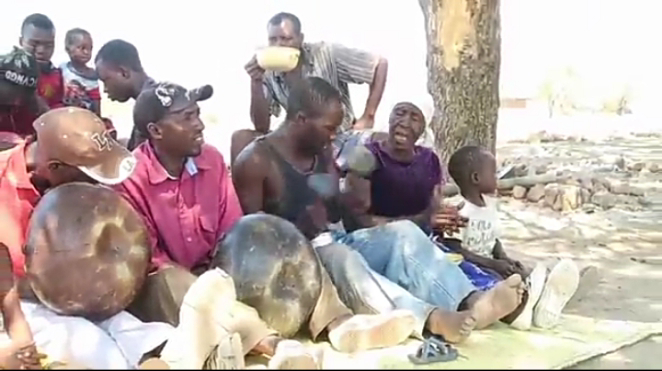
Mbira playing involves mastering technique and building endurance to sustain intensive playing for long hours. This is especially true in the Bira ceremony, where players may perform for around 12 hours or more, accompanied by hosho and sometimes drums. There is also clapping and stomping of feet, all contributing to a dense rhythmic environment. In a Bira setting, the Gwenyambira plays inside a Deze resonator, yet must still be clearly heard while remaining in good sync with all other elements. The playing has to match the intensity of dancers and singers, whose goal is to help spirit mediums reach possession. This process requires discipline and consistency from the Gwenyambira.
Gwenyambira in Zimbabwe protect their fingertips primarily by growing their nails and, when necessary, using specialized wire picks or traditional protective wraps rather than decorative rings. The intense, percussive plucking of metal keys requires a combination of natural calluses and reinforced technique.
Players often grow the nails on their thumbs and right index finger long, sometimes extending past the fingertip. They use both flesh and nail when striking the keys. Over time, years of playing develop thick calluses that protect the skin from splitting. Some players also use copper wire wraps or small metal picks, especially if nails break or when a brighter tone is preferred.
We pluck mbira metal keys using a mix of fingertip flesh and nail striking against flat metal keys.
Some mbira builders make softer keys, but many Gwenyambiras who play in Bira ceremonies prefer a certain hardness. The keys are usually made from high carbon spring steel, either hot or cold forged. These mbiras balance durability, strong sound, and stability, with keys tightly fastened so they do not loosen during intensive playing. The wood is also selected for vibration and durability.
Most mbira players do not cut their thumb and forefinger nails. This supports a technique that balances flesh, nail, and callus development to produce a clear and audible plucking sound. Playing for long hours, sometimes over consecutive days, especially during months like August when kurova makuva ceremonies are frequent, requires serious physical and mental endurance. It is not unusual to play three consecutive nights. The fingertips, where flesh meets metal, are where the sound is produced and where strain builds up over time.
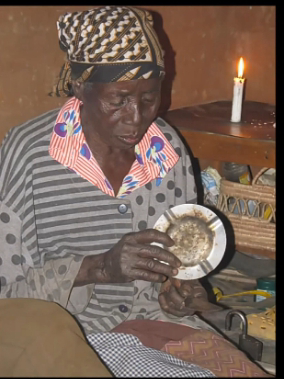
Because of this, additional support methods become necessary. Sometimes Gwenyambiras use back nails or crafted solutions. At Ngoma iNgungu Cultural Arts Center, Sekuru Murehwa, also known as Stanford Dzopfunga, makes stainless steel plates about 0.33 mm thick, cut into a T shape. The design is adjusted to fit the player’s finger size. The longer section is folded, leaving the shorter end as the plucking surface. These are practical tools shaped through experience and need.
Additional practices include applying a small amount of Vaseline to the keys to reduce friction and allow smoother movement. The keys are also filed to remove sharp edges that could cut the skin.
I was taught Nhare Mbira by Sekuru Siziba, whose given name is Edson Marwizi. He is from the Buhera area, also known as Njanja, and he taught me in a traditional way that included rituals and rites of passage that a Gwenyambira goes through. He taught me over 60 songs from his repertoire and how to sing Mahon’era, Huro, and Kudetembera for each of them. He lived in Makokoba in Bulawayo and worked as a security officer before returning to Buhera.
Sekuru Siziba did not keep long nails. Instead, he used wire picks shaped into rings that coil around about one third of the finger near the tip. As simple as they look, they require careful construction to fit properly, not too tight and not too loose during intensive playing.
Getting used to them takes time, especially for someone who has played without them before. They can feel unfamiliar at first, similar to how new shoes once felt when many of us were used to walking barefoot. The sound of metal striking metal is something some players dislike, though I find it percussive and often blended into the overall sound, especially with buzzers on the mbira and within the Deze.
Hakurotwi Mude also used similar wire picks, shaping them slightly differently but based on the same principle. He was the first Gwenyambira to have an album recorded in his own name, and his singing style on Nhare Mbira remains unmatched to many listeners. Sylvester Mujuru once mentioned that even his elders recognized Hakurotwi as someone who had mastered the oldest style of singing for Nhare Mbira.

Whenever I prepare to play for consecutive days, I carry my wire picks with me in case I need them. Mbira rings are not just accessories. They are tools shaped by necessity, built through knowledge, and refined through use.