In the rolling granite hills of Matopo once thrived a vibrant tradition of wood carving; an art form born from patience, spirit, and ancestral rhythm. Though it still survives, it now faces quiet decline. This is my reflection on the endangered tradition of Matopo wood carving, and the masters whose hands shaped Zimbabwe’s artistic identity.
Matopo: A Hive of Wood Art
Matopo was once one of the true hives of wood art in Zimbabwe; a living gallery of creativity and cultural depth. Many of those talented artists have since passed on, and their children, who had also mastered the craft, moved to South Africa and Botswana in the early 2000s.
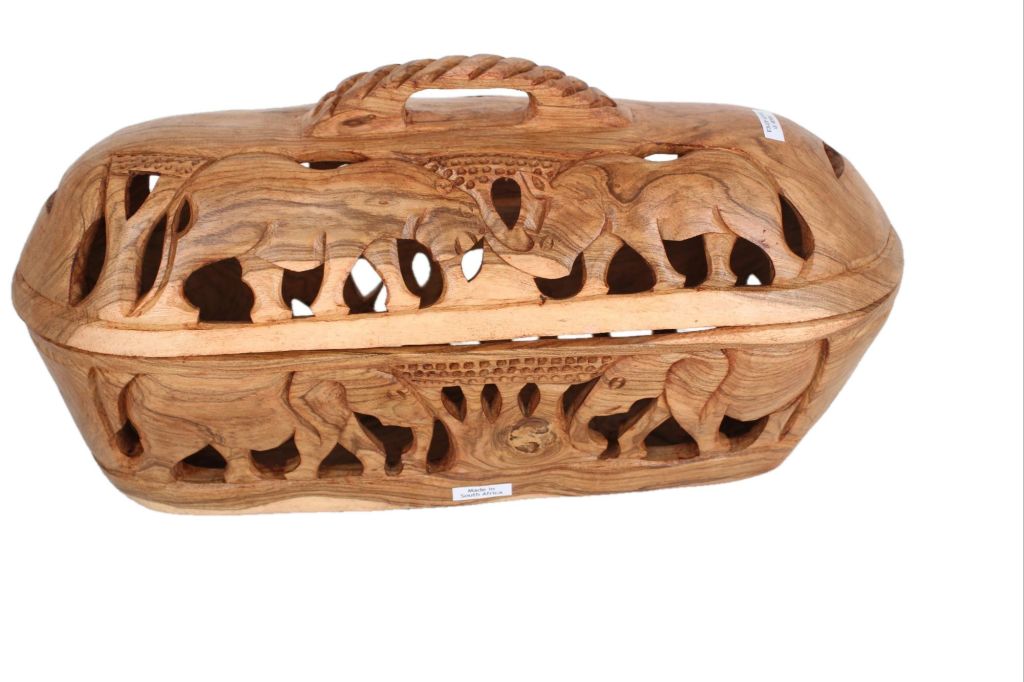
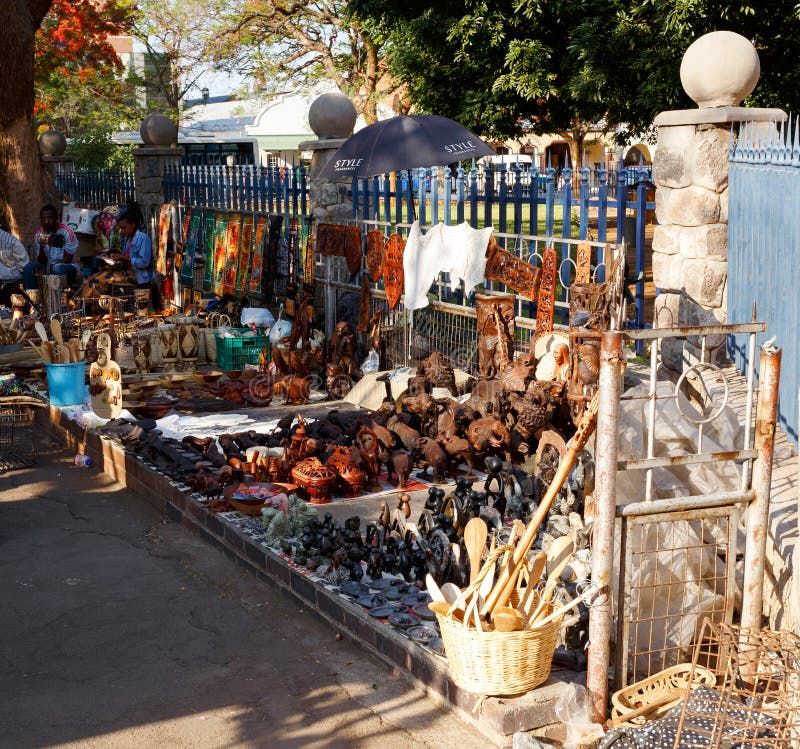
I still remember the beautiful wood carvings that were sold at the Bulawayo City Hall Curio Market before 2000. Across Zimbabwe, artists worked with wood from dead trees that include uMtswiri, uMganu, uMvagazi, uMnkampa, Abandoned, Umvimila, Iminyela, uMkusu woods, shaping it into expressive and spiritual sculptures. I also recall the breathtaking carvings I saw in Victoria Falls in 2003; and the distinct artistic voices from the Tonga, Venda, and the people of Mwenezi, Bubi, and Rutenga. But among them all, my closest connection was always with the wood artists of Matopo.
The Fading Tradition of Pure Art
Today, there are far fewer people who still uphold that timeless Matopo style of carving. Many of those artworks found their way to international markets, yet their creators remained anonymous and underappreciated at home.
It reminds me of the Tradional dancers across Zimbabwe, Traditional instrument players like the Gwenyambiras who are celebrated by scholars and ethnomusicologists but remain unknown to most Zimbabweans. It’s a reminder that pure, soulful art often exists quietly in the shadows, far from the glare of commercial success.
The Matopo carving tradition isn’t gone, it is endangered, still breathing through a handful of committed artists who keep the chisels moving and the spirit alive.
My Journey Into the Villages of Matopo
I remember my first visit to the villages of Matopo. When I arrived at NgiNathisa/Nathisa, the level of wood art I witnessed there was unmatched, i would meet numerous villagers walking caring a hand made chisel workingon an art piece. Everyone spoke with admiration about Mbenji Tshabangu. I would walk nearly four hours to reach his home in Silozwana, where the carvers were even more numerous and skilled than those near the main Bulawayo Maphisa highway.
In 2017, while visiting the Amagugu Heritage Site with Amy Garapic and Mukta Raste, I met Tshimba, Mbenji Tshabangu’s brother from Silozwi. His carvings were among the most intricate and detailed I have ever seen; yet even he insisted that Mbenji’s artistry was greater.
Preserving the Spirit of Matopo Wood Carving
These memories still live vividly in me. The artistry of Matopo: shaped by patience, tradition, and spiritual depth; deserves not only to be remembered but protected. I often wish to revisit what I saw growing up and help revive and sustain that level of craftsmanship.
Zimbabwe’s wood carving tradition tells a story of resilience, identity, and deep connection to the land. Like the roots of the trees from which these artists carved their masterpieces, the legacy of Matopo still runs strong beneath our soil, waiting for a new generation to nurture it back to full life.
Maybe we need a wood carving study camp at Ngoma iNgungu Cultural Arts Center since we already upgeld the Matopo Women hut paintings.
Music is huge part of a Shona funeral and people sing Jiti, Wisiri, Vapositori, and contemporary songs during the course of the funeral. In Harare suburbs that include Mbare, Mufakosi and Mabvuku people of Malawian descent also have a similar culture of drumming, singing and dancing during funerals.
There are some practices like the ancient Kwenje and Tsuri Shona music that are endangered and are now practiced by a few. I would love to highlight the kwenje rhythms and songs that are sound by the Korekore Tavara.
Kwenje drum
The Sound of the Senegalese Sabar is similar to the sound of the Kwenje drum of Zimbabwe. Same playing technique.
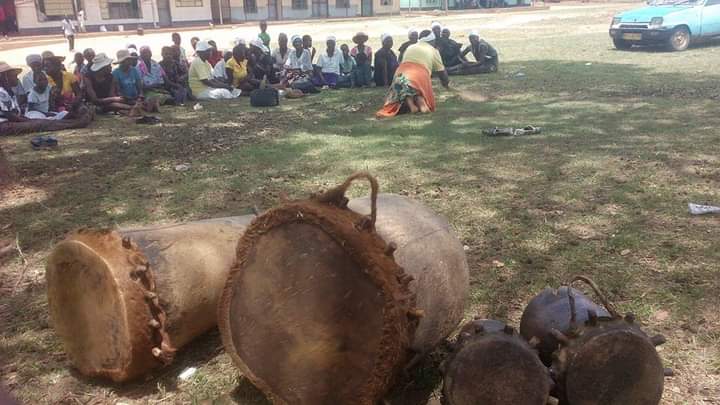
Uses are different…. Kwenje is played to notify the villagers about death and played also during the course of the funeral. Soulful slow to med paced songs with dense meanings are sung, usually led by elderly women who are also regarded as poets.
Kwenje rhythm played on the second bar of the beginning of the cycle.
The Mbira types I have been mastering since 1995..
Top row, From left to right: 1)Nhare Mavembe/Gandanga Tuning 2)Hera of the Korekore Tavara 3)Shawasha Karimba 4) 34 key Njari of the Korekore from Magunje 5) Nyonganyonga/Malimba of the Eastern Highlands of Zimbabwe, Central Mozambique and Southern Malawi 6) Nhare Nyamaropa tuning
Middle row, From Left to Right: 7) Njari Makonde of the Korekore 8) Mbira DzevaNdau from South East Zimbabwe 9) Karimba from Magunje and Zambezi Valley 10) Nyungwe Karimba from the Korekore Tavara, Nyungwe and Buja, Also know s Njari Duku 11) Old Style Nhare Nyamaropa layout 12) Matepe from Mudzi district played by the Nyungwe, Sena, Tonga, Marembe, Hwesa, Barwe
Bottom row; From left to right; 13)Madhebe of the Buja from Mutoko District 14) 48 key Korekore Munyonga from Mash Central 15) Tumbila/Timbila of the Hlengwe of South East Zimbabwe 16) Mbila Madeza of the Venda people from Limpompo 17) Nhare Nemakonde 18) 30 key Njari of Magunje
Between Middle and Bottom Rows: 19) the one obove number 15, is Chaka Callisto Chawasarira’s 19key Karimba
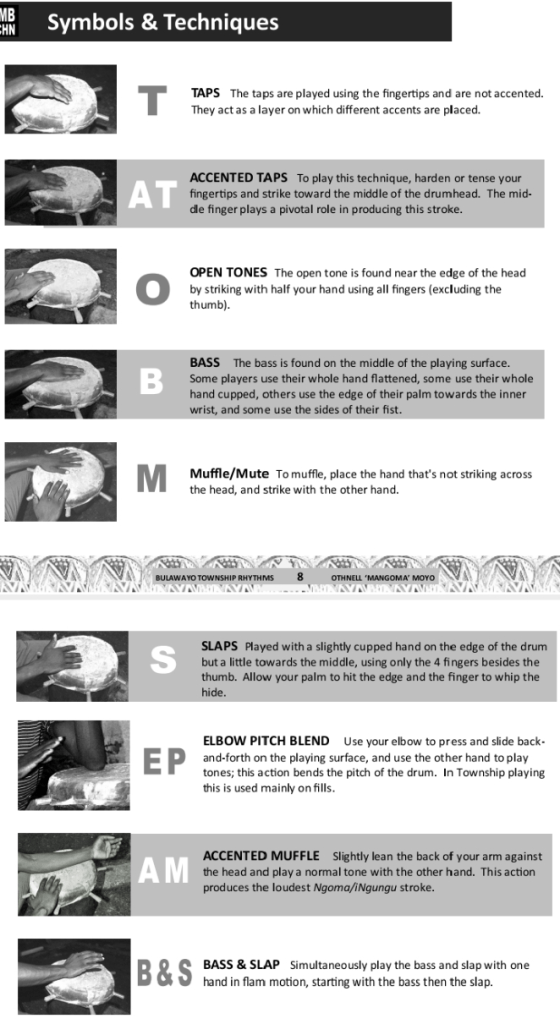
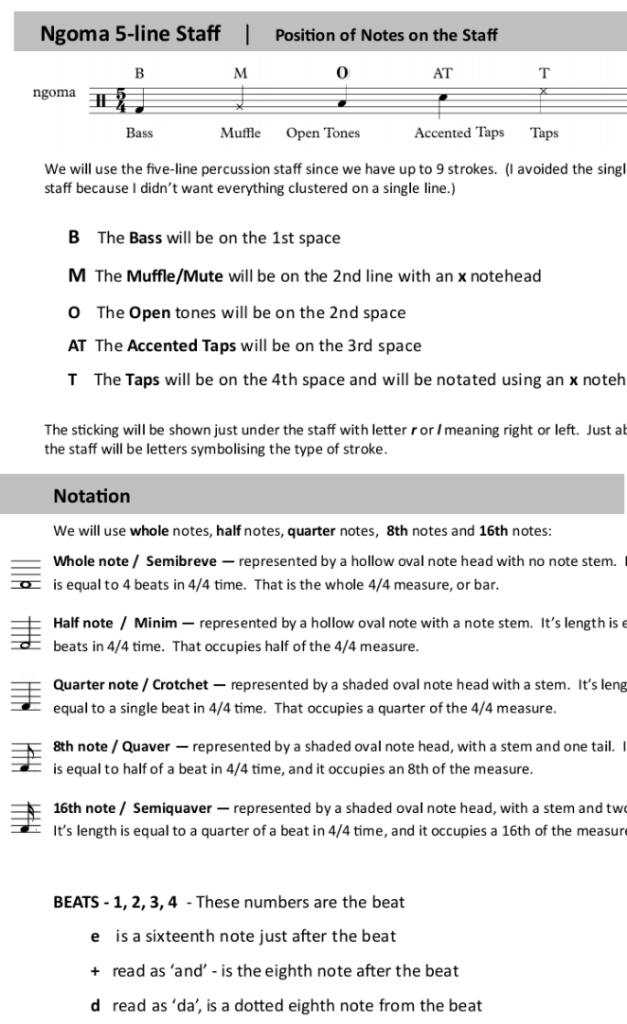
Most of the 4/4 or 2/4 Township Rhythms are played using the hand-to-hand sticking (RL RL RL RL or LR LR LR LR). The primary strokes are Tap Strokes and the accents can vary from Tone, Bass, Muffle, Accented Muffle, Slaps etc., and the stroke that is native to Zimbabwe, which is an Accented Tap. The nonaccented taps are usually a demarcation of the beat by 4.
Ngoma/iNgungu is one of – or perhaps the oldest – type of African drum and there are more techniques that may come according to one’s feeling, but those listed above are the main basic strokes.
ACCENT – a louder and more defined stroke, also called ‘stress’ in music, it is the momentary emphasis on a particular rhythmic or melodic detail. STICKING – states the hand assigned for that note. Sticking is the process in which we assign certain notes to either our left or right hand FLAM – Almost striking at the same time with two strokes but allowing a minor delay between the two notes. A flam is comprised of two single strokes that are played at different heights. The highest and loudest note is called the primary note, while the lowest and softer note is called a grace note. However in the Township style we use ‘flat flams’ also known as ‘double stops’ – when grace and primary notes are played in unison.
This book is mainly for hand drummers, but a kit drummer can substitute – the taps with hi-hat strokes – accented taps with the snare – bass with the bass drum, and – the open tones with the toms
Practice
Practice takes place in two ways: technical and spiritual. Technical practice involves reading and applying everything from the book. Spiritual practice is about playing what the muscles would have remembered, while allowing the creative and spontaneous part of you to explore.
The spiritual part is inspired by your zeal and passion, but comes only after mastering the technical part.
Music is a discipline because it requires discipline. Set aside a specific time each day, dedicated to mastering the styles. After that, playing for pleasure is 24/7!
How to use the book:
– Get comfortable and prepare for a few hours of practice. Place the book upright near your drum so you can read it clearly. – Read and understand the symbols used for strokes and techniques. – Play each exercise several times over. Stay on each example until you can play it correctly 4 times without stopping, before moving to the next one. – Once you have mastered the exercises and songs, play in allegretto to allegro tempo (see Glossary) – but not for Playing to Reggae (6d).
Practical care
One has to get used to playing so that the hands can adjust and resist blisters. Until then hands are likely to get blisters, but once one gets the correct technique, the blisters and callouses will stop. In the event of sore hands, soak them in warm water with salt for 2-5 minutes and then apply hand lotion. If it’s too painful, it may be advisable to take a break and rest your hands until they heal.
This passage is an extract from the Bulawayo township rhythms and songs Book 1. ISBN 978-0-7974-9249-3, EAN 9780797492493. You can Purchase a full copy by following this link and also subscribe to our YouTube and Follow us on Facebook, Instagram and Twitter for video tutorials. Contact +263 774 096 269 othnellmangoma@gmail.com Facebook: Othnell Mangoma Moyo Editing: Penny Yon
The next article will be on the 2nd of March 2022 and will go right into the rhythms and the reference videos will be on Othnell Mangoma Moyo’s YouTube channel
Before 2005, very few people in the townships, or ‘high-density’ suburbs, of Bulawayo had television or radio sets. Families like my own used to sing and in the absence of drums, would play on boxes and buckets to entertain themselves.
The few families who owned radios and TVs would allow others to come and watch or listen, and people would imitate what they saw and heard. Over time, as more families could afford radio and TV and DVD players and satellite dishes became accessible, people were able to choose what to watch or listen to. This led to drummers developing different ‘feels’, influenced by the type of music they were exposed to. With the National Railways of Zimbabwe headquartered in Bulawayo, rail travel was a major means of transport, and the industrial sector of Bulawayo employed people from all around Zimbabwe and neighbouring countries. When people from different places and ethnic backgrounds meet and live together, there is a great level of exchange; since music means a lot to us, their different styles were welcomed and when merged with ours, became the music of the townships.
Drumming in the townships was also influenced by different folklore techniques which appealed to everyone, regardless of origin or ethnicity. The Nguni peoples of Zimbabwe and South Africa share a lot in common including language and music cultures, and there has always been lots of South African music played in Zimbabwe; this too had a strong influence on our style of township drumming.
Youth Centres in different townships were functional and used for rehearsals. Amakhosi Township Square Cultural Centre was a beautiful place built in Makokoba which provided facilities for artists and displayed the beauty of African culture. Talent scouts came to the centre from far-flung countries, and this led to more people joining the burgeoning arts industry.
The early 2000s also saw the economy of Zimbabwe declining drastically and many people left for other countries in search of greener pastures. When they returned, they brought with them new music which also influenced our drumming styles. Artists went to Europe and other parts of the world, and brought back drums such as the Djembe (West Africa), Congas (South America/Cuba), Darbuka (Mediterranean/Arabic), Cajon(Peru), Calabasse (West and North Africa) which were incorporated into our style.
The ‘Bulawayo Township’ drumming style spans a number of decades, making it a living tradition, which is still evolving.
EXTRACT 1 FROM THE BOOK “BULAWAYO TOWNSHIP RHYTHMS AND SONGS”
My Journey
As a little kid of four, I followed my sister Rea Moyo to her rehearsals with Impilo Arts and NASA at Amakhosi Township Square Cultural Centre, and by the age of five I was drumming at home in the township with my family and others. But my fires for drumming were really lit when watching one particular drummer, Austin Tholo, at Mzilikazi High School; I had not come across anyone who made the drum talk like Austin did. I then decided to focus on drumming and went from community to community, watching and learning.
Austin Tholo’s technique was from a drummer called Vusa, who also trained Leon Sivako, Makula Moyo and many other teenagers and children in Makokoba Township, at the Thabiso Youth Centre. I listened to the likes of Lewis Ndlovu, Sikhathele, Trevor Ncube, Tongesayi Gumbo, Dee, Antony Gwarimbo, Lyons Matope, Lizwe, Ndifas, Leon Sivako, Makhula, Jayie and Ngqa. I also had the privilege to share with the likes of John Phiri, Bruce Ncube, Mehluli ‘Gomez’ Dube, Brighton Nhloko Chisare, Bekezela Sjure, Donavan Maulana, Antony Maisa, Alfonso Ndlovu and Thembelani Dube, who were notable drummers of that period. Groups like Platform 1 and Freddie Gwala were heard on every radio set and most dance and theatre ensembles sang that music or composed music along those lines.
Music by artists like Papa Penny, Peter Tinet, Shimora, Ntombi Marumbini, Joe Shirimani, Dan Chanda and Brenda Fassie also contributed. D-gong came, Kwaito came, and Kwasa Kwasa came as Ndombolo which also added the DRC- (Democratic Republic of Congo) feel in our township drumming style.
I first studied the Amantshomane folklore style (see Glossary) and later mixed it with Freddie Gwala, Kwasa Kwasa, House Beats, a bit of Reggae, Funk, more Zimbabwean folklore rhythms and many West African styles.
Over the years I joined several overseas tours in support of Zimbabwean artists, which led to many other connections with interesting drummers of the world. My journey so far has led me to share the rhythms and styles of this period with you. It is the first book of more to come.
Instruments & Drumming Styles
iNgungu Yomhlaba The iNgungu Yomhlaba is a beautiful light-wooded drum of Matabeleland mainly used in ceremonial gatherings, playing a pivotal role in rain-making, cleansing and other rituals carried out at shrines by Guardians of Culture, and by drummers in homesteads around Matebeleland. Among these, the revered Njelele Shrines lie about 60km from Bulawayo. The same level of respect, fear of these shrines overflows to the Ingungu Yomhlaba which is an important medium for the activities that take place at the shrine.
We grew up with overwhelming awe and respect for this drum; for example, no one was allowed to sit on any part of the drum, even the sides where there is no skin.
With 90% of the people following Christian doctrines that did not approve of the use of the iNgungu yomhlaba, a stigma grew against the drum, leading to fewer people using it. Younger generations began to dread the drum because of what they had been told. However, when researching among older drummers from both Bulawayo and Harare, I was told that Ingungu Yomhlaba became very much in use in music ensembles in the 90s.
Tonga Ngoma The Tonga drum is a prized instrument, of higher value because of the type of wood and craft that is used. It is one of the most beautiful drums you can find in Zimbabwe, from ‘the people of the Great River’ along the Zambezi, concentrated in the remote Binga district, and on both the Zimbabwean and Zambian sides of Lake Kariba. Because of the density of the wood, the Tonga drum has been widely used all around Zimbabwe. Many Tonga people migrated from the Binga district to Bulawayo, being the closest large city, for work and trade.
The Kusile Flats in Makokoba became known as ‘EmaTongeni’ because of the many Tonga people who lived there. They brought with them their unique drumming styles, and with Tonga drum-makers exporting their instruments to tourist areas, more of these drums were accessible and being played in the Bulawayo townships.
In this Book
A new way of drumming hits Bulawayo every now and then, but in this book I will stick to documenting styles that used to prevail before the introduction of djembes and other ‘borrowed’ instruments. I have named the rhythm variations or fills according to the name of the person I first saw playing them.
Where the fill or variation is my own creation, the influencer is indicated. We will look at rhythms that we used to play on the iNgungu Yomhlaba – a style which translates well to the western drum kit, Djembe, Cajon, etc., because it’s a very groovy style that allows vocalists to despatch their prowess, and enhances one’s sense of rhythm.
The first four chapters are an introduction to township drumming from the late 1990s to early 2000s. At the end of the first 4 chapters, feel free to alternate between songs, fills, rhythms and their variations.
In Chapter 5 we will look into Baba Mnumzane’s 3/4 Style and its drumming variations.
In Chapter 6 we will look into five rhythms from way before I was born, which my older siblings and colleagues showed me, but were seldom used in our time because they didn’t appeal much to drummers of our generation. I hope this book will help you to treasure and preserve our culture through understanding, and as an introduction to and documentation of Bulawayo styles and their origins, and learning techniques for playing the Zimbabwean Ngoma.
The book is mainly for hand drummers, but a kit drummer can substitute the taps with hi-hat strokes; accented taps with the snare, bass with the bass drum and the open tones with the toms. The book can be used for choirs who want to learn these songs from Bulawayo (be free to transpose to the key you desire); and for teaching rhythm and songs to a music class.
You can follow the next articles which are extracts from the book and I backed up by YouTube tutorials to help you with visuals that translates to the transcriptions that will be on this blog.
This morning (9 July 2021) we lost one of ours – Sinati Nyamande has passed on.
She was around 94- 97years old. She is the best Mbira Vocalist that I have ever listened to. The one who yodelled like a flute and Clapped rhythms that were from celestial spaces. Her knowledge of Matepe music was exceptional.
She has kept the Matepe music alive and imparting it to young generations and also to her Children and Grand Children who are ” The Zonke @Family”.
Zonke Family in Action
When ethnomusicologists were recording Mbira players they would mention the names of the Mbira players and they would seldom mention the names of the people singing but on the recordings that Sinati sang they could not resist mentioning her name.
Her recording with the brilliant Karimba Player Johani Chiyeha Bandera and Matepe Master Thomas Dzamwarira is my favourite. How she sang to the songs Siti, Kunyangara kwawo Marembe, Kuyadya Hove and Karimuchipfuwa.
I think she had many things to teach the Mbira Vocalists of our time, sadly, she didn’t get the opportunity.
I also admire that she was always true to Eastern Zimbabwe traditional music regardless of the stigma from locals who term it demonic and also during the colonial era where these instruments were destroyed and the one who practiced it faced worsened stigma and in some case assault or even death
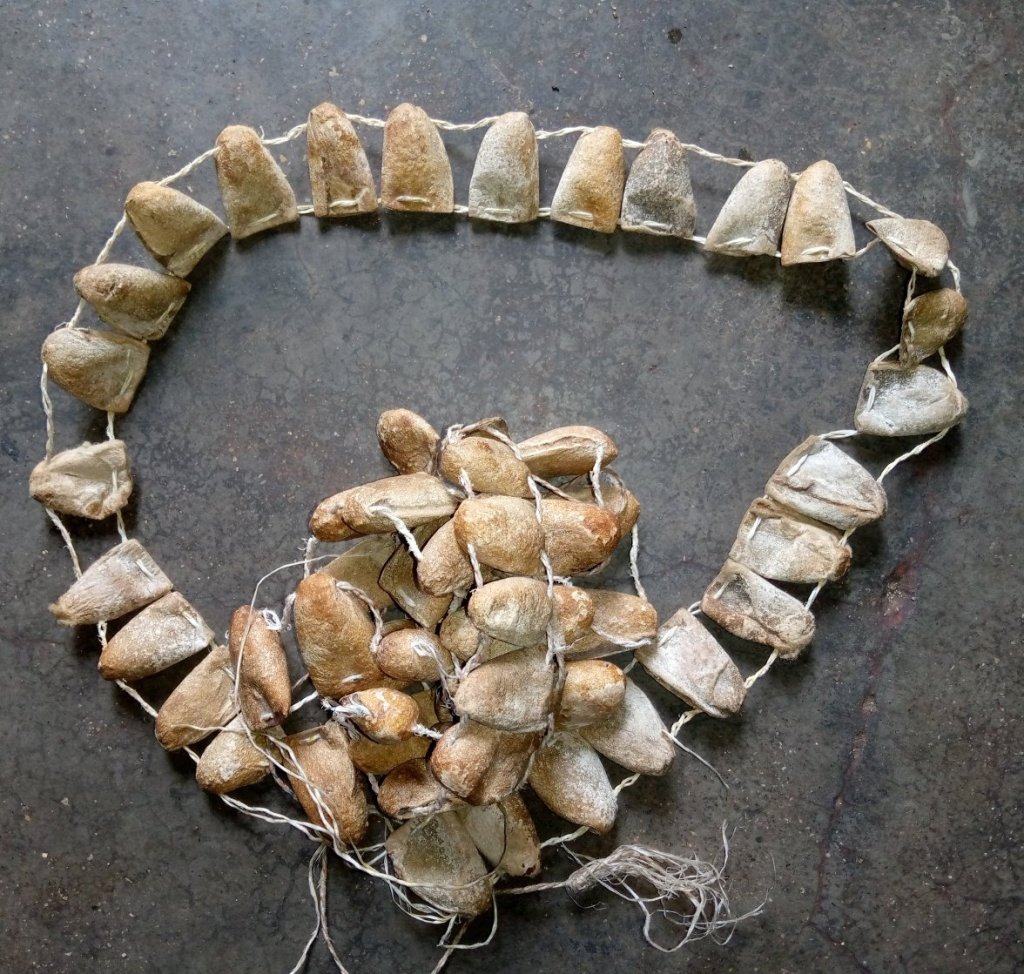
Buzzing, rattling and shaking are important elements of traditional Zimbabwean music making. Some ethnics have a shakers player and some may attach the shaker or buzzer to their instrument or may tie them on their legs, hands or body while dancing or playing and instrument.
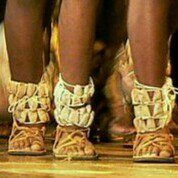
The above mentioned accessories are leg rattles that are tied around the ankle to calf/shin area of a dancer. Please note that these rattles can be found in different places and may be shared amongst ethnics due to migration, inter marriages, availability of materials
In this video of Amajukwa eNjelele the males have magavhu and women have amahlwayi and one of the males have magavhu staked in threes and coming to towards the shin https://youtu.be/GRH2SDc7AOk
Amahlwayi
Amahlwayi are a strap of small shakers and strings. The small shakers are from a Amahlwayi plant that has pods (Volume 10ml) that are dried. The string is made from either plastic strings from sacks or from Isikusha which is a fibre plant.
Amahlwayi
Amahlwayi are very common in Matebeleland and also in Botswana and Parts of South Africa. Some of the dances that Amahlwayi are used include Hosana, Amajukwa, uMdadada, Setapa, Tsutsube
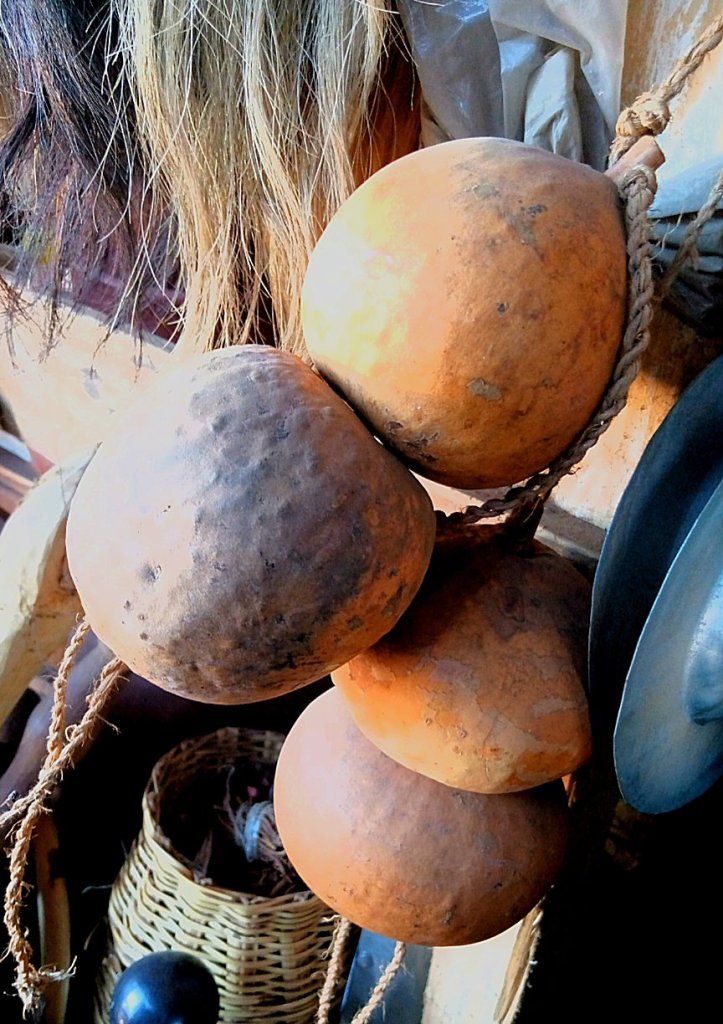
Karanga Magavhu are 2 or 3 round gourds, each having 2 holes and a stick that goes through them and held together by a string that is also the one tied to the leg. Some of the Dances that use Magavhu are Mbakumba, Bira, Mhande
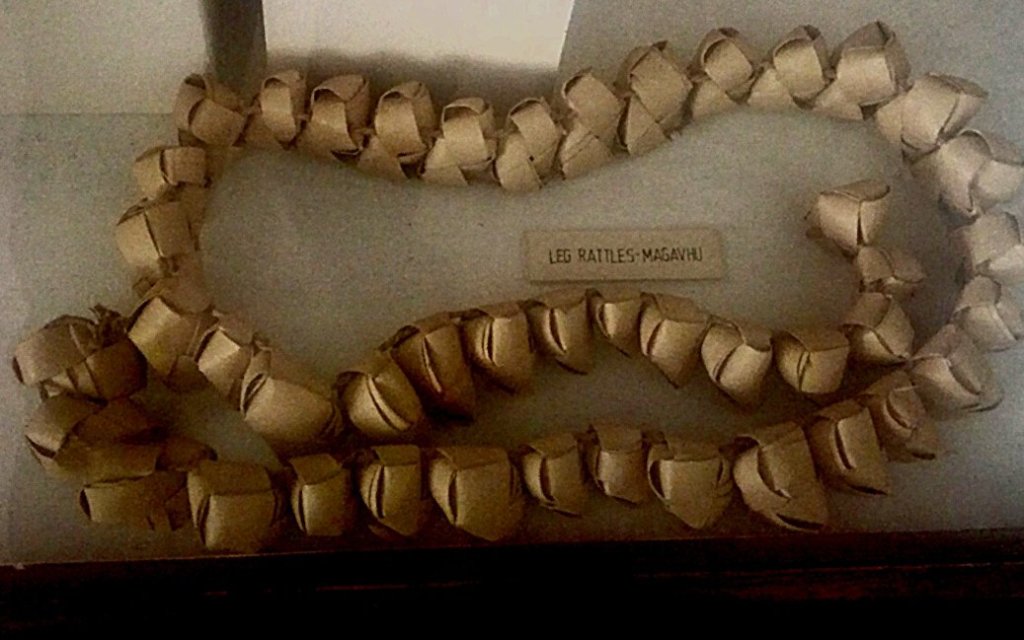
Budja Magavhu are a strap of shackers made from reeds. Tsotsa and Tsawa dancers tie this type of Leg rattle.
Tsotsa Dancers at All Souls Mission 2019Budja Magavhu
Magagada
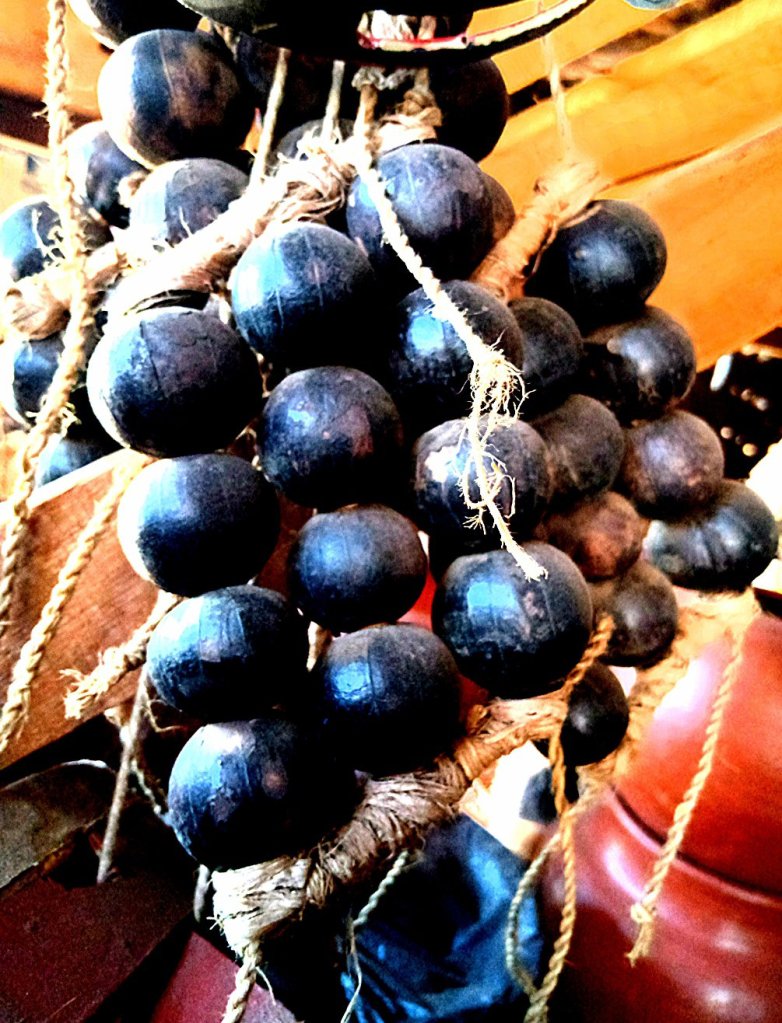
Common in Gokwe, Zhombe Silobela, Nkayi , Nyathi and surrounding areas . The Magagada are made from round black pods each having 2 holes. They are straked into three or fours and can be two, three or four stakes held together by a stick that has reeds or fibre strings tied around it and attached a fibre string for tying to the leg
Magagada
I have also seen different rattle made from cans, small containers and synthetic strings and these is because of scarcity of traditional materials. The above mentioned are leg rattles that I have seen/used during the course of my career and if I come across more I will definitely share.
Ngoma just like other Zimbabwean folk instrument is dialect oriented. Most Zimbabweans use bare hands to drum. Areas around Chiweshe plays with one hand holding the stick and the other bare. The Gandira/iNdandanda gong players use one stick and the other hands holds the drum while the middle finger is use to press and release the back side of the skin so as to alter tones.
Miyambo/Miridzo/Izigodo
The Korekore of further North of Zimbabwe, the Nguni playing Xigubhu, the Hera drumming for Ngororombe use sticks in both hands.
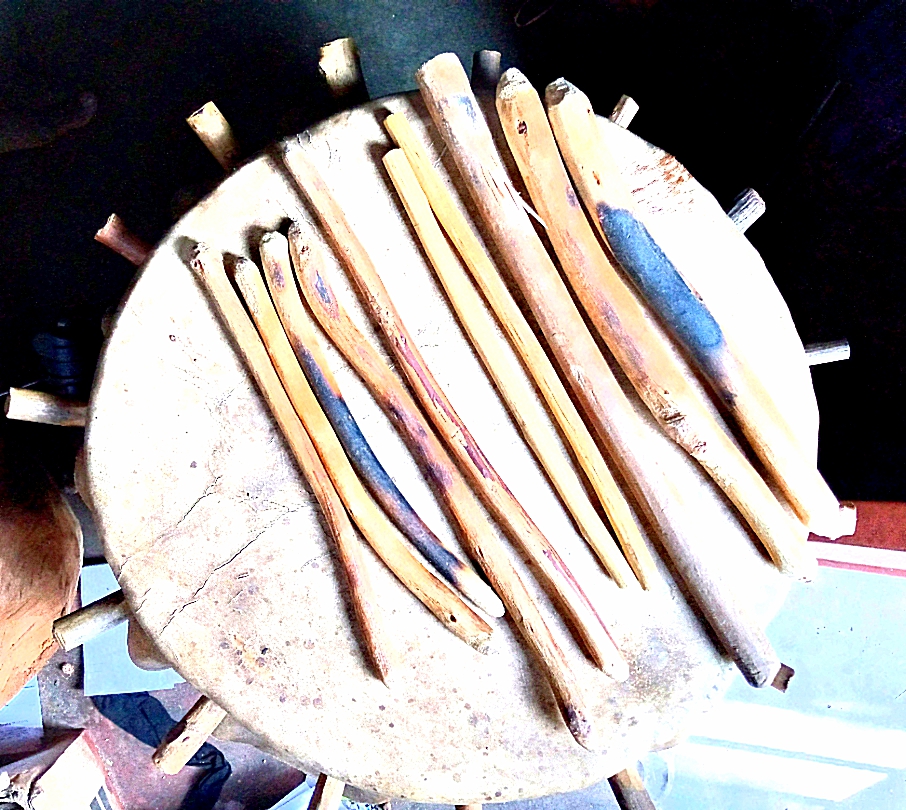
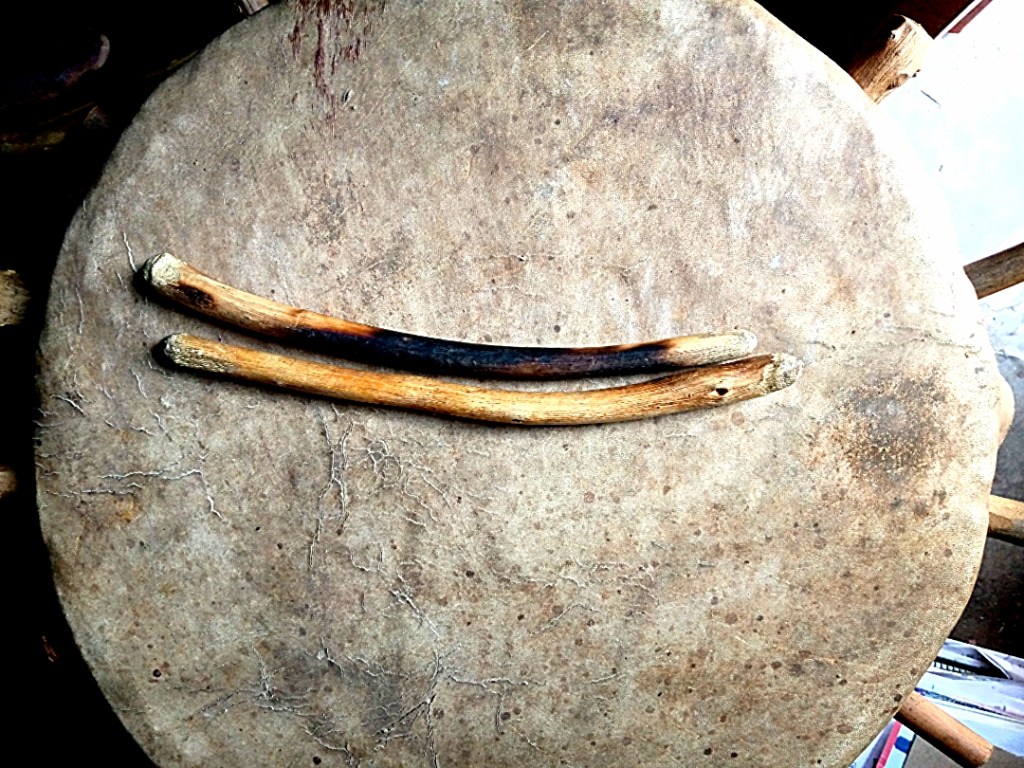
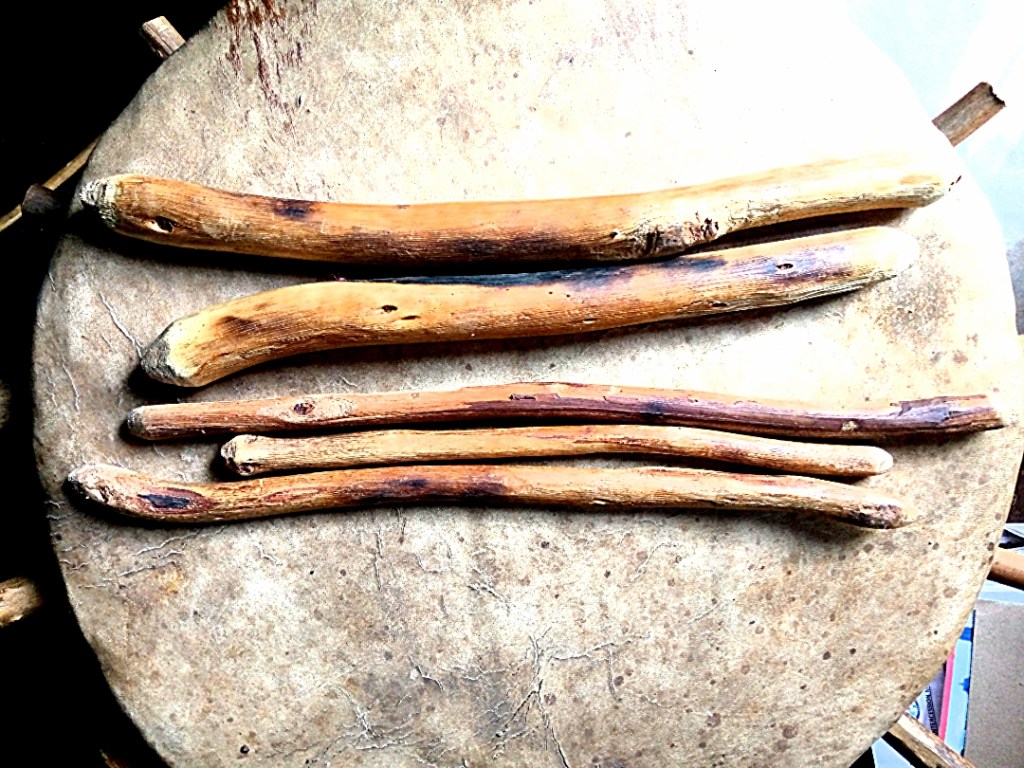
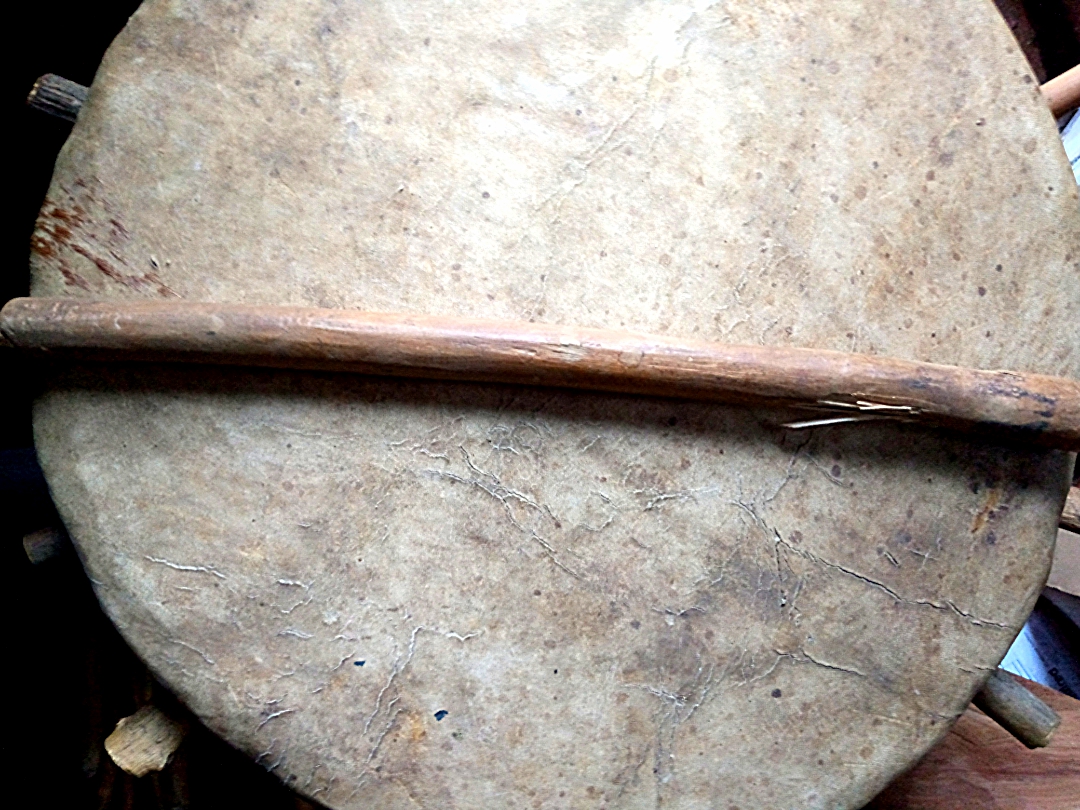
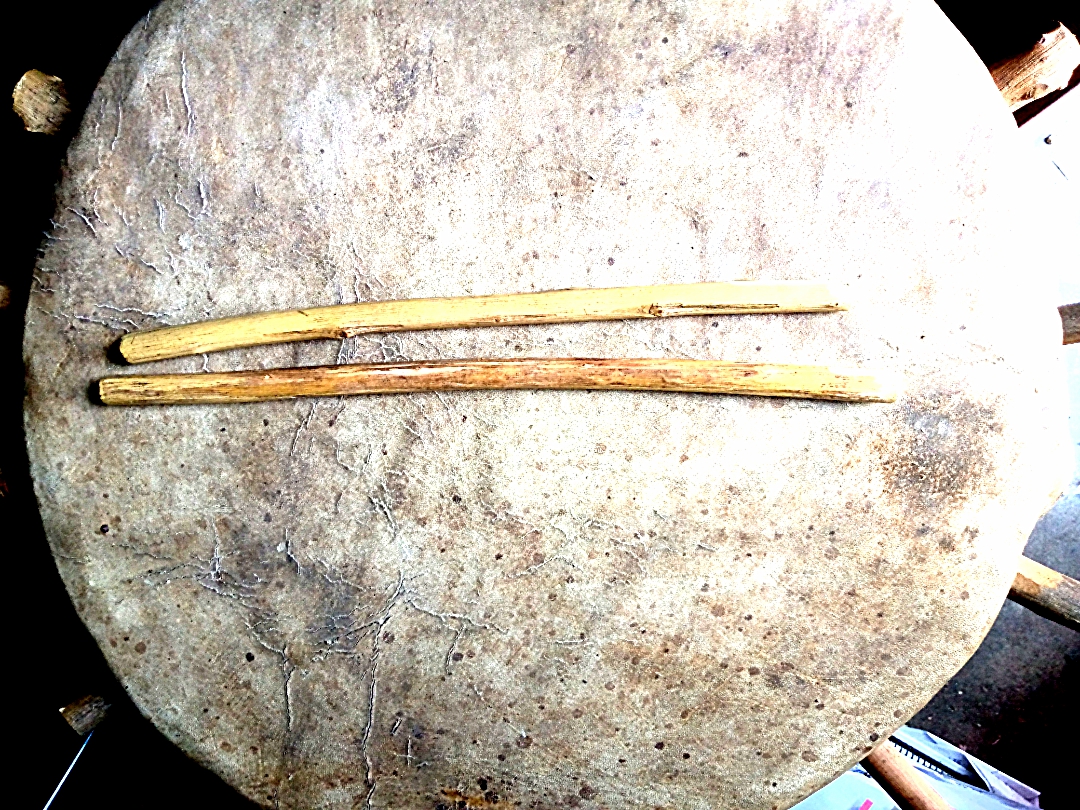
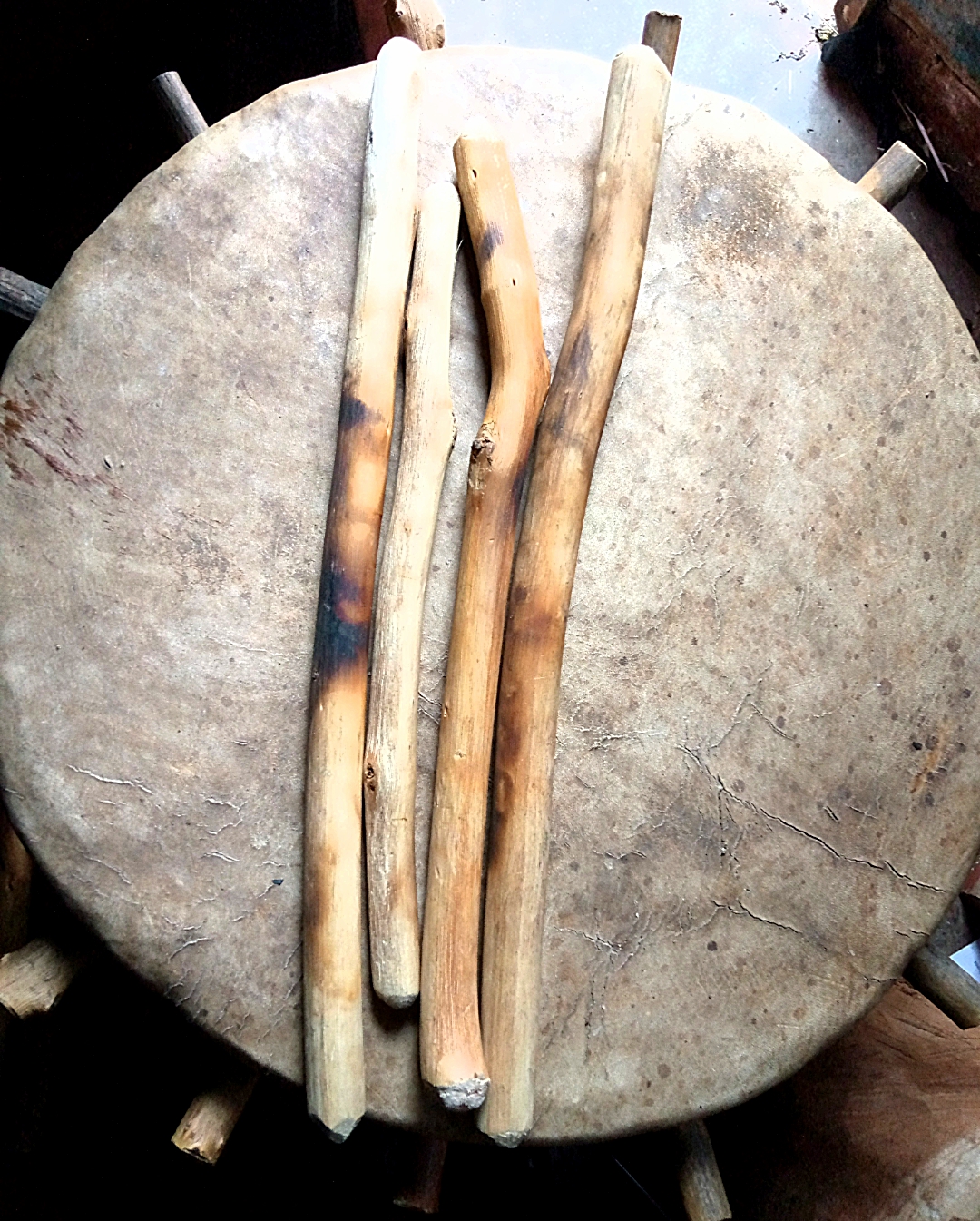
I have been to villages where they refer to the drumming sticks as Zvimuti, Zvitanda, Miyambo, Miridzo, Izigodo, Moonzyo and these are different in size and density as they play different types of drums of different shapes and sizes. The most desirable stick should be slightly curvey because straight sticks breaks the hide. Also accessibility, quality, purpose play a big role in choosing sticks.
Some woods are poisonous or may cause allergies hence sharing about some of the drumming sticks that have been used for centuries.
Korekore Drums in Mash Central
Some sticks are brifly scotched using fire known in Ndebele as UkuFusa or kuBvura in Shona. Traditional oil is smeared to it to make them tougher, dry, and smooth.
Musasa/Igonde
Other Names; Msasa, Mutatsa, Zebra wood
Musasa/Igonde sticks for Mhito/Tusindi/Tungwiro drum
This is the most commonly used drumming stick across both Matabele and Mashonaland. The Musasa is a hard wood and the sticks from it are neither heavy nor light and most players prefer using them.
Munhondo/Umtshonkwe
Other Names; Mnondo, Munondo, Mutondo
Munhondo/Itshonkwe sticks for Dandi and Mutumba
Munhondo and Musasa are closely related trees and one can only distinguish their difference from the leaves. Most of my sticks are from Munhondo as it is slightly harder than the Musasa and it has a slightly redish inner part. I prefer Munondo when playing Dandi.
Mupangara/Ugagu
Other Names; Chinese Lantern, Munhangara, Muruka, Musekera, Sickle bush
Ugagu stick for Xigubhu
One of the hardest woods. Ideal for playing Xigubhu/isiGubhu. The thin branches are ideal for mhito.
Munjiri/Umhlampunzi Sticks for Mhito/Tusindi and Tungwiro
Often used for making walking sticks, fishing rods. MuNjiri is very dense and is ideal for playing Dandi. It was the wood I used mostly when growing up in Bulawayo. Still my favourite though I can’t access it in Harare.
Umtshekisani
Used for brushing teeth. Its thin branches are good for playing Gandira/INdandanda
Mufuti
Ideal for playing Mutumba and Mhito
Muunze/Umbuze
Other Names; Gizhe, Guzhe, Mountain Acacia, Redwood, Tsotso
Muunze/Umbuze sticks for Dandi drum
A whitish hard wood. It had some of the best sticks for Dandi.
They are a lot more good wood for drumming sticks and I will share more in the forthcoming articles.
Here are weblinks of Zimbabweans drumming with sticks
On the 21st of January 2020 I got a call from one of Zimbabwe’s traditional Dance custodian Sekuru Majeza to meet and discuss. I met him close to the national railways station Harare and he told me of how he had heard stories about me and wanted us to work together.
We made arrangements to meet on the 15th of February as I was traveling to the UK the following day. We agreed to work together at Music According to Percussion, for his group in Glen Norah and that he would frequent my drum and dance class at Afrikera. I was so happy about that as I would start working with the master and was geared to learn from him and also explore his and my our culture together.
When I came back I reunited with Mr Majeza and started working on MAP’s dance routines and enhancing them. I would board a combi to Glen Norah and work from the community center with vaMajeza.
I remember speaking about Ngororombe, and types of Muchongoyo from his home land Chipinge but one of my highlights of our first rehearsal was him explaining where the name Mbakumba was derived.
He explained that Mbakumba was a name given at the Zimbabwe National Dance Company and its proper name is Shangara yevaKaranga. The dance that we normally term Shangara is Shangara of the Zezeru from Domboshava, in Goromonzi District.
Shangara of the Zezuru
It’s a drumless tap dance accompanied by just clapping and voices and serious tap dancing. It was then mixed with mbira and gondiya drum patterns during the Zimbabwe National Dance Company era (late 1970s to 80s) because the leaders thought mbira dance was repetitive and that the Domboshava Shangara lacked instrumentation hence the association of Shangara and Mbira. The other difference between the Shangara which was commercialized and ancient Domboshava Shangara is that the steps of 2 or 3 dancers would be seldom identical meaning the structure was like Zimbabwean polyrhythms construction in which we have anovamba, then anodaira then different kutsinhira and the end result is this huge polyrhythmical chunk of steps clapping and voices.
Mbakumba
The name Mbakumba was given because of the drum pattern which is a 12/8 pattern played on two ngoma with different tones.. Though In some of the Hugh and Andrew Tracey’s Karanga recordings before Independence the name Mbakumba was mentioned ( in a documentary about Simon Mashoko).
The first Zimbabwean Dance Company was a great initiative, they helped preserve a handful of folk dances and music styles and wanted to create a performance and standardize the dances to be taught in schools but some of its flaws were alterations and distortion and also embracing the Church culture of suppression of Dances of Mashave and others that were termed demonic leading to 80% of the dances being lost or endangered…..
Mbakumba is one dance style styles that has stood the taste test of time and even to date, we still have dancers practising and performing it both local locally and abroad. Here is a link to a tutorial by one of Zimbabwe’s prominent female Dancer Ndomupeishe Chipendo. https://youtu.be/p-84m_Fv1gQ
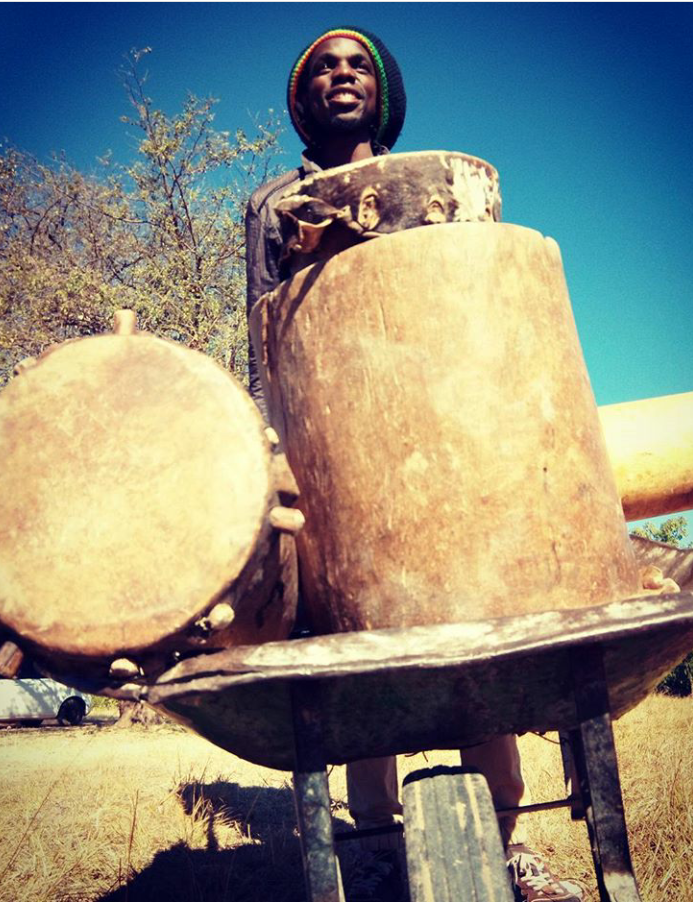
Othnell Mangoma Moyo in Gweshe village, Chiweshe June 2017
Zimbabwe has a lot of different types of Ngoma Drums and the difference can be in shape, size, material used for construction…
What is Ngoma? Ngoma is a Bantu drum made from a hallow wood log and an animal hide stretched on the playing surface and held by either wooden Pegs (hoko in Shona) or straps made from animal hide.
In Zimbabwe it carries different names ie Ngoma, iNgungu, isiGubhu, Xigubhu and each ethnic group has its own (note that some ethnic groups may have similar ones) that is made and shaped according to their desires, material available in their region and its use.
Ngoma is also a very spiritual drum as it is used to evoke and summon spirits and it is very sacred in some societies as it is also regarded as an instrument of the mediators.
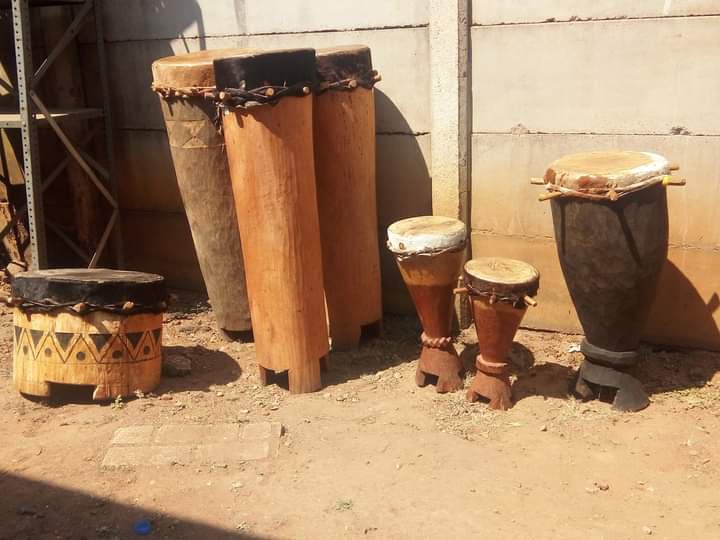
Ngoma Drums… From Left: Dandi, 3 Mitumba, 2 Mhito and a iNgungu Yomhlaba
Province, Ethnic Groups in Zimbabwe and the Ngoma they use Zimbabwe has about 16 languages spoken and a vast number of Ethnic Groups. The most spoken native languages are Ndebele and Shona.
Kalanga Drums Settled is the South Western part of : Tjamabhika, Shangana neShumba, and Dukumo/Mandobo Kalanga drums are played while sitting and can be around 40cm to 70 cm in Height. The playing surfaces differ, Tjamabhika being the one with the widest followed by Shangana neShumba and Dukumo is the smallest. These Drums are also used in Ndebele and Nambya Society. They are used as accompaniment for dances that include Umdadada, Ihoso/Amabhiza, iHosana , Amajukwa. The material used for building these drums are wood and hide. The wood can be from light to medium dense of trees like uMphaphapha, uMngomangoma, uMgqogqoqo and the hide is cow hide that is stretched on the playing surface and held by wooden pegs.
Drums of the KaRanga The largest Ethnic group in Zimbabwe settled in Midlands and Masvingo Provinces. They use drums similar to those of the Kalanga but are mostly two and also incorporate Gandira gong. The difference is the names as the Kalanga are Ndebelised and the KaRanga fell into Shona groups The KaRanga have dances like Mhande, Bira, Chinyambera, Gozhori, Ngororombe and Jaka. In Mhande, Bira and Shangara/Mbakumba two drums with different pitches are played and the concept of Kutsinhira is used. Gozhori, Ngororombe and Jaka has have more drums mainly four that are played by three players accompanying pen pipes/Ngororombe players, singers and dancers. The material used for Building KaRanga Ngoma are mainly wood and hide and the Gandira gong has straps or wooden sticks for the player to hold while playing.
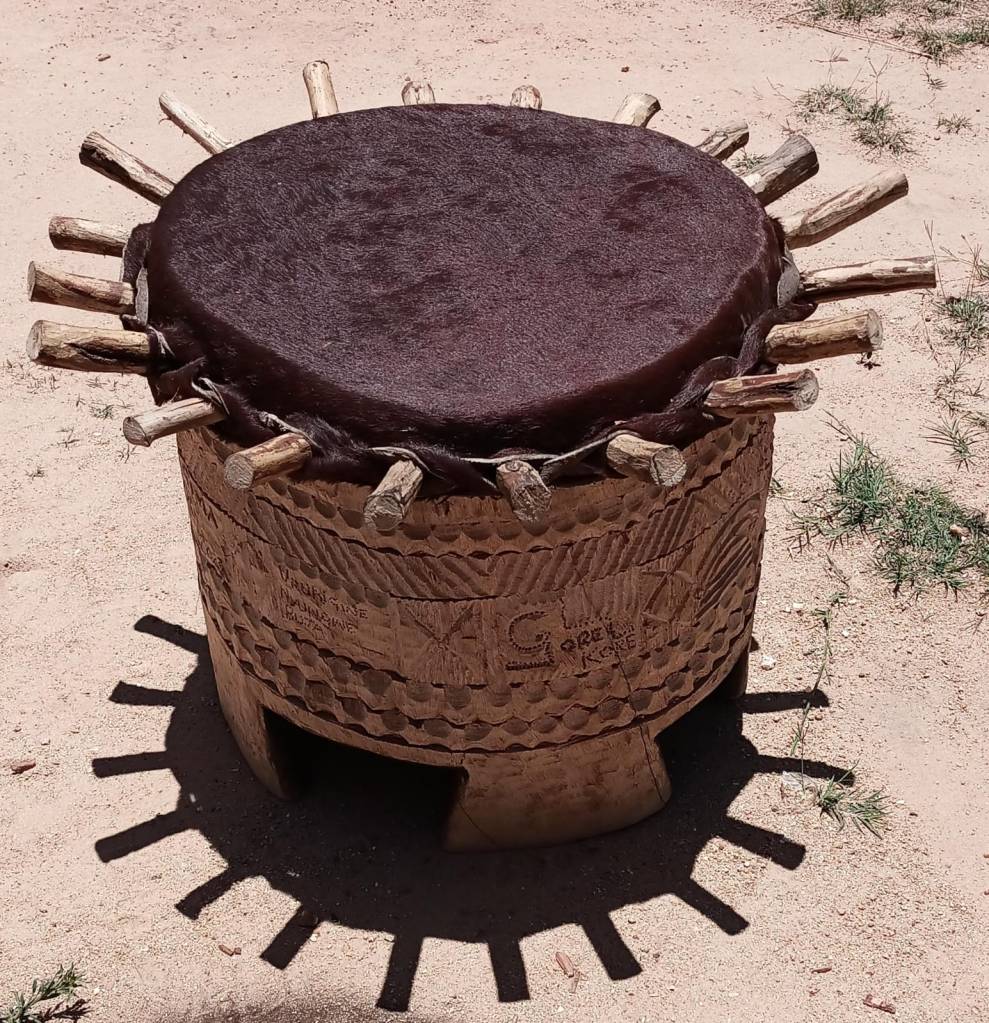
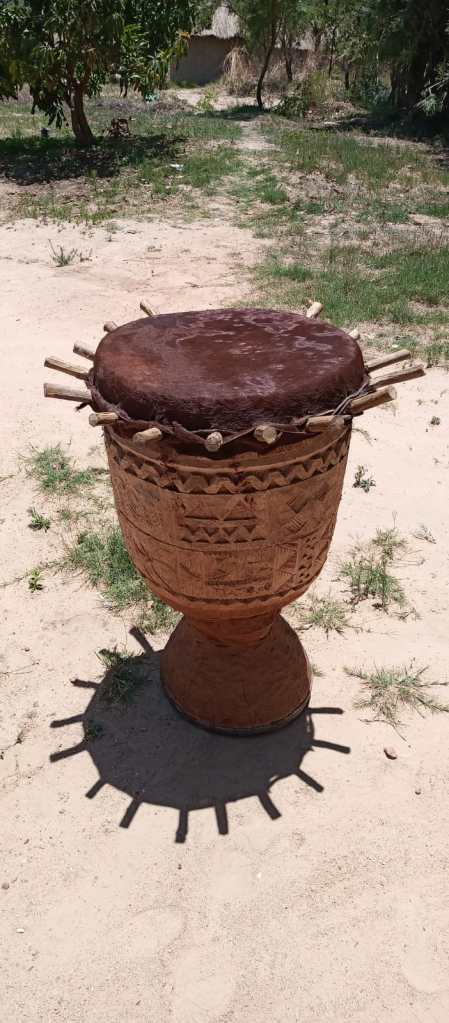
Gandira/Indandanda A frame drum that has a Cow, Goat, Snake or lizard skin stretched on the playing surface and held by either straps or wooden pegs or both. Gandira is the Shona name and Ndandanda is the Ndebele name and the name Ndanda is also for the music and dance that this drum accompanies (Area like Nkayi, Nyathi, Silobela, Etc) . Dandi Drum The Dandi is the drum from an area in the Zambezi Valley and is played mostly by the Korekore (Zimbabwe), The Budja and Nyungwe (Zimbabwe and Neibouring Mozambique) and the , Sena Tonga,Chikunda of Mozambique. I will classify the Dandi into two types : the Gorekore and the Budja In the 20th Century, Gorekore Dandi was also given the name Bhuru bass because of its role as the bass drum in Korekore drum culture and the name bhuru means Bull. Other native names for the Dandi are, Dzvamudzvamu, Dani, Dandanda, Jenje and also called Kwenje in Mutoko, a drum of the Budya/Toko used for sending messages and summon people. This drum is made from a cylindrical hallow log and a cow hide that is held by wooden pegs.
Gorekore Dandi Drum built by Othnell Mangoma Moyo for the Ngoma Ingungu Cultural Arts Center in Munyawiri Domboshava
Dandi of the Budya
The Dandi is the bass drum played in the Tsotsa Rain Making music and dance of the Budya.
Budya Dandi Drum built by Othnell Mangoma Moyo for the Ngoma Ingungu Cultural Arts Center in Munyawiri Domboshava
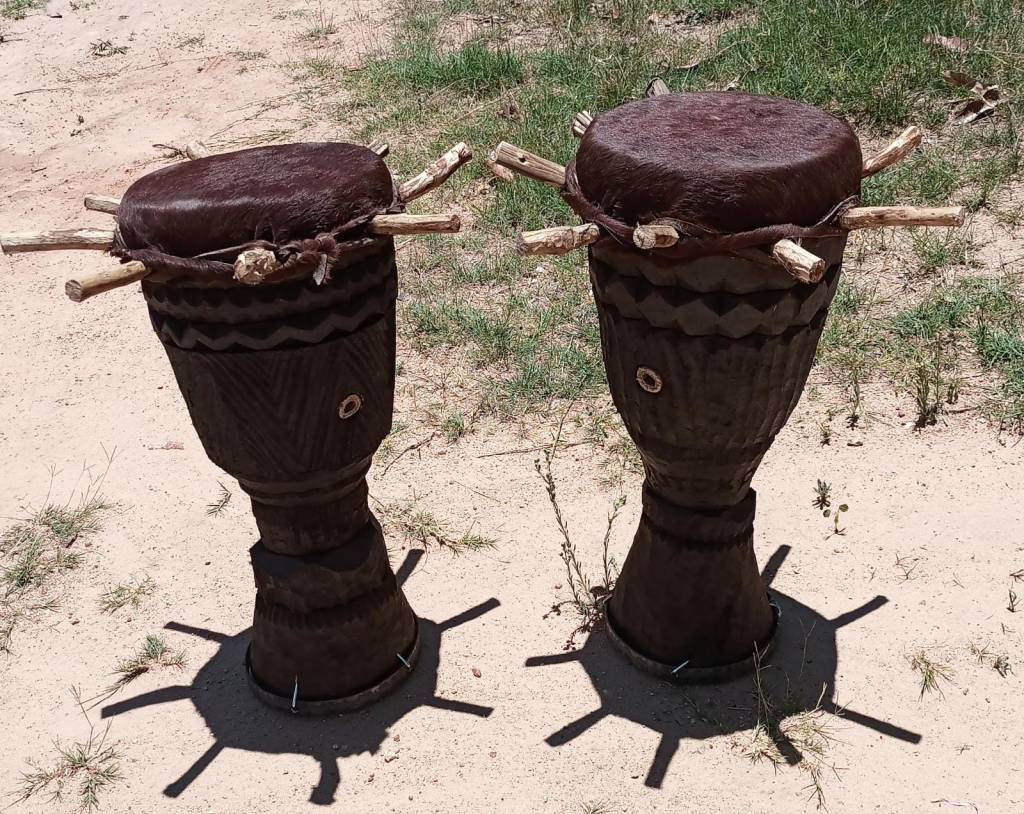
Mhito The short and high pitched drums of the Korekore of the Zambezi Valley, it is given different names like , Mbanda Mbanda, Nhungiro, Karembera, Kausindi/Tusindi
Mutumba/Mutandarikwa
The tall drums of the Zambezi Valley also common in Zezuru speaking community. It can be from 80 cm and can be even be taller than an ordinary man
3 Mutumba Drums
Tungwiro Budja/Toko short and high-pitched drums it’s it is closely related to mhito but has a closed bottom. In Nyungwe and Sena communities is called Tusindi/Kausindi
Tungwiro or Tutsindi Drums built by Othnell Mangoma Moyo for the Ngoma Ingungu Cultural Arts Center in Munyawiri Domboshava
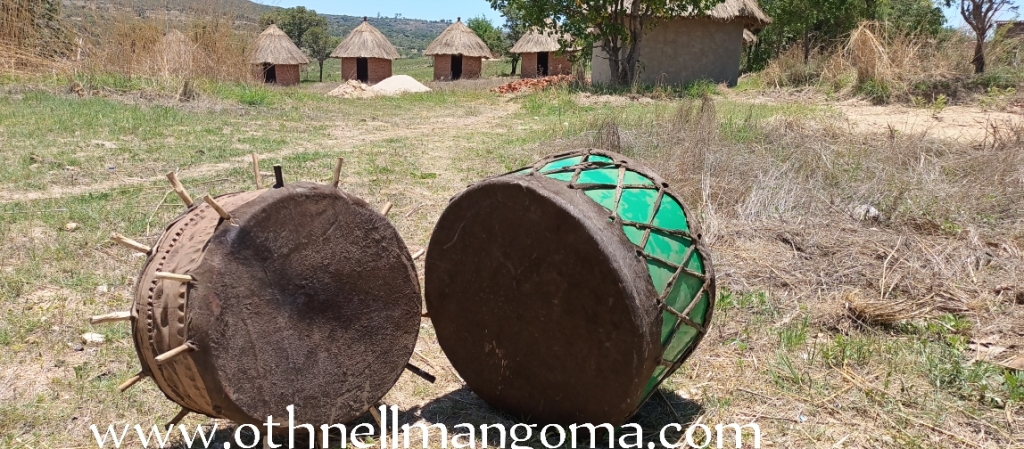
Xigubhu/ isiGubhu Nguni and Ndau Double headed drums. The drums are common wherever the Nguni/ Ndwandwe/Ngwane/Mthethwa passed or settled when they trekked from the south most Part of Africa. The Ndau of Zimbabwe and Mozambique use these Type of drums in their different Dances. They are cylindrical in shape vary in sizes. Played while lying horizontal
Xigubhu,Isigubhu Drums. The one on the Left is the old style wooden Xigubhu with skin Held by wooden pegs and it was built by Othnell Mangoma Moyo and the one on the right was built buy Fabian and Maria Moyo using ⅓ of a 200l Metall sheet container, for the Ngoma Ingungu Cultural Arts Center in Munyawiri Domboshava
.
Venda Drums
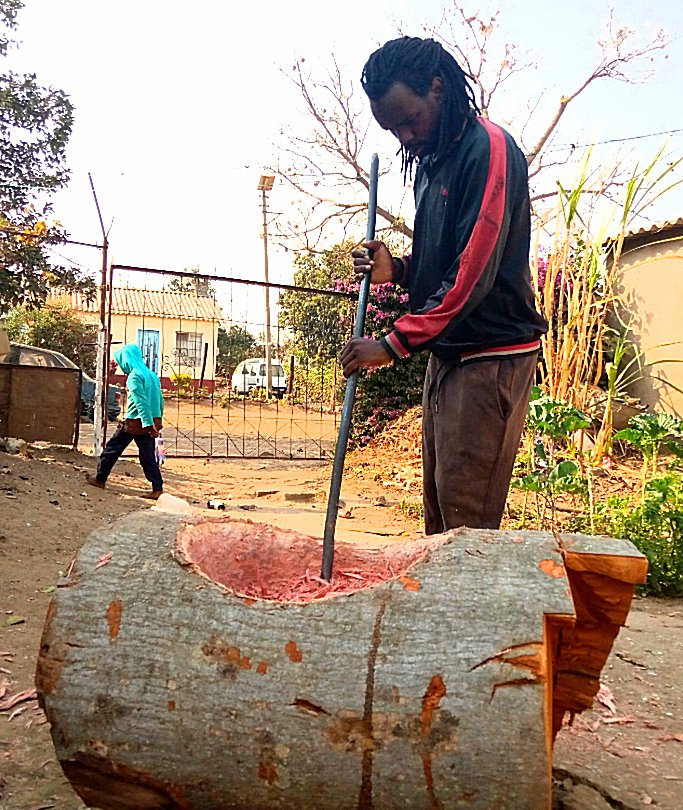
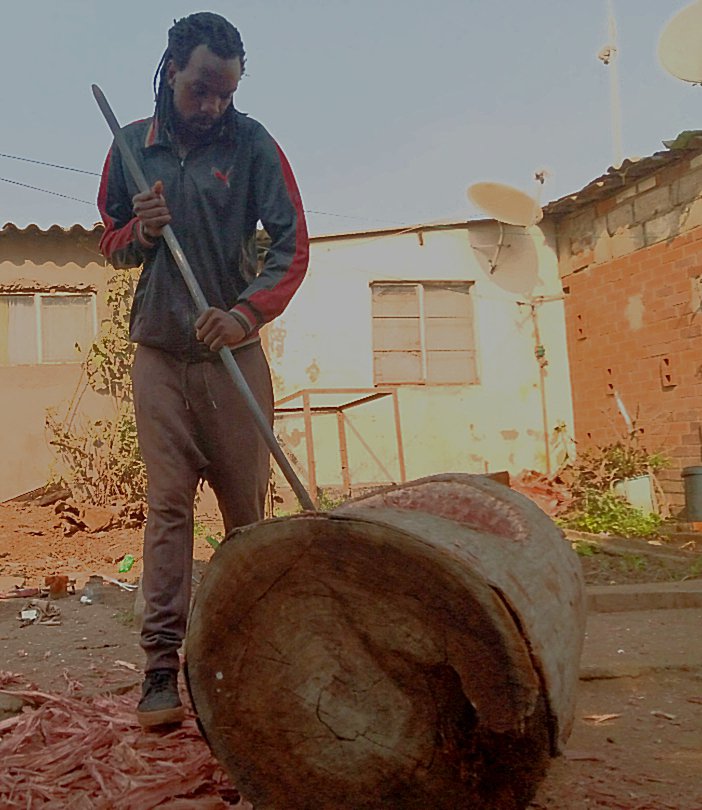
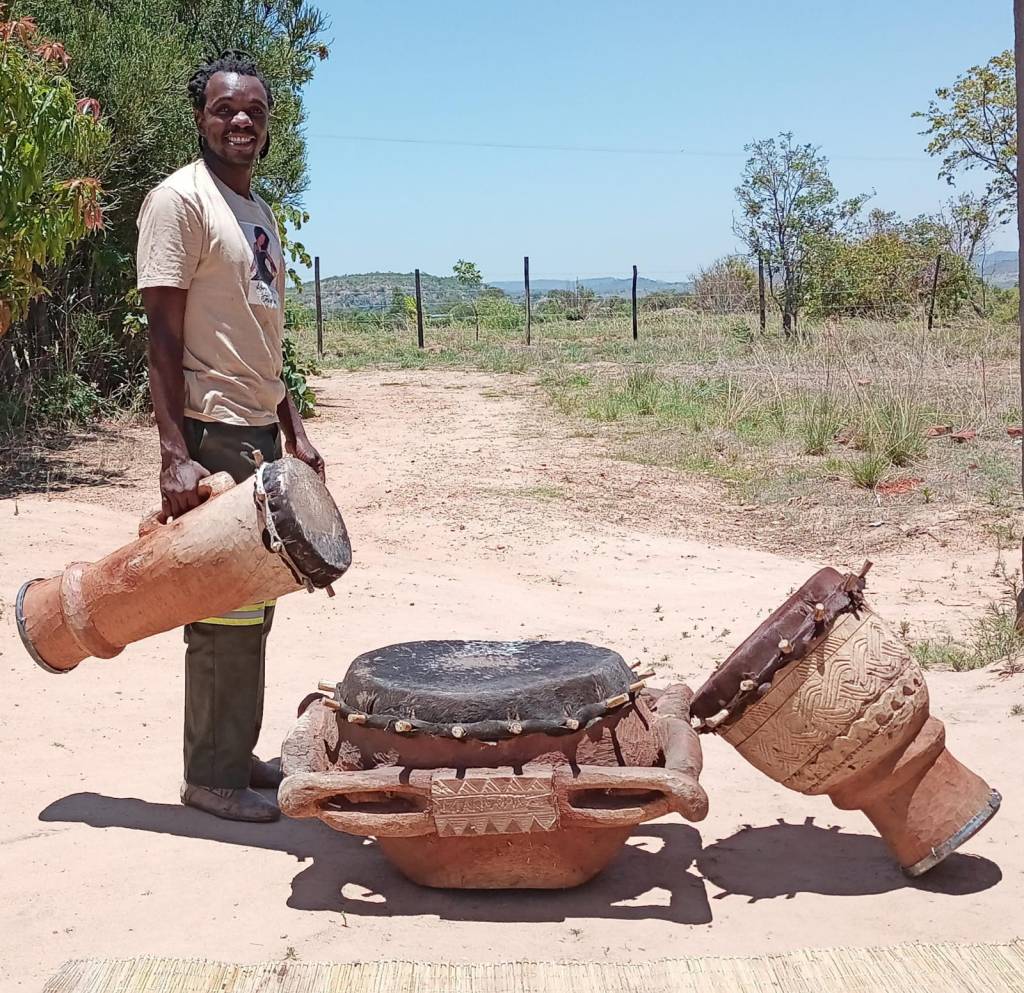
Venda have Pot/Hemispheric and Conical shaped Drums. The name of the drums are Ngoma, Thungwa and Murumba . Ngoma is the bass drum and has a Hemispheric shape and carved from very hard wood. Most Zimbabwean Ngoma drum are hollowed downward the trunk but the hemispheric Venda drums are hallowed across /from the side of the trunk .
Othnell Mangoma Moyo hollowing a Venda Ngoma
The Thungwa is a smaller sized version of the Ngoma. It is also hemispheric in Shape and played using a stick
The Murumba is a conical shaped drum and hand played while held between the thighs.
Venda Drums built by Othnell Mangoma Moyo for the Ngoma Ingungu Cultural Arts Center in Munyawiri Domboshava



 Ngoma Music and Dance